The Comparison Trap – Social Media and the Way We See Our Skin
Social media doesn't just show us idealised faces - it changes how closely we scrutinise our own. Dr Chia Min Shan on perceptual drift, the difference between valid clinical concerns and comparison-driven anxiety, and the question worth asking before any treatment begins.

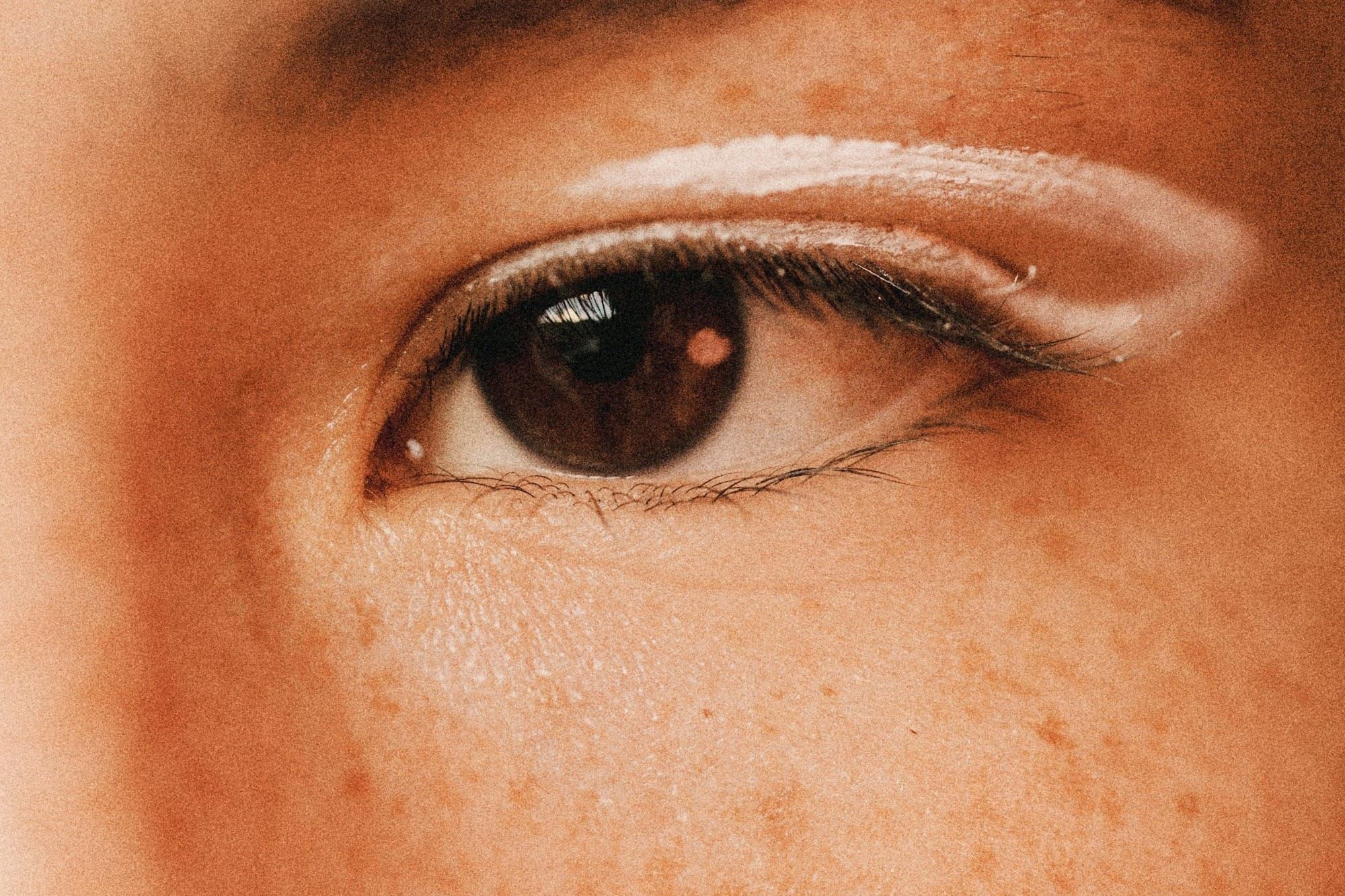
She had very specific questions.
Not vague ones - not "I want better skin" or "I look tired." Specific. Her pores. Her skin tone. Whether the redness on her cheeks was something that could be addressed permanently.
That kind of specificity takes time to develop. You don't arrive at precise, targeted observations about your own face without having looked closely. Repeatedly. Probably in different lighting. Almost certainly through a phone camera at some point - which shows you things the mirror, with its flattering distance and familiar angle, never quite does.
She'd been studying herself. Most of us have, more than we'd like to admit.
What Social Media Actually Does to Self-Perception
It's not the filters. Most people know about filters. The more insidious effect is subtler - it's the volume of faces we now see daily, and the standard of skin those faces appear to have.
Scroll through any platform for ten minutes and you'll see hundreds of faces. Many of them professionally lit, digitally smoothed, or simply selected because they looked good that day. The cumulative effect isn't that we think everyone looks perfect. It's that we begin to notice our own skin differently. We develop a granularity of observation we didn't have before.
Pores we never thought about. Texture we accepted as normal. A slight unevenness in tone that we genuinely didn't see until we started looking through a camera lens.
This isn't vanity. It's perceptual drift. The reference point shifts, quietly, over time - and suddenly things that were simply part of how we looked become things we're aware of, bothered by, and researching treatments for.
When the Observation Is Valid and When It Isn't
This is where clinical assessment matters.
Some of what patients notice through this lens is real and addressable. Enlarged pores, for instance, are a legitimate concern - but not all enlarged pores are the same, and treating the wrong type won't do much.
Pores enlarged by excess sebum - more common in younger, oilier skin - respond to treatments that reduce oil production and clear the follicle. Oral isotretinoin, chemical peels, microtoxin, and certain lasers address this type.
Pores that have enlarged because the collagen support around them has thinned with age - a different mechanism entirely - respond to treatments that rebuild that support. Ultherapy Prime at 1.5mm, collagen stimulators, skinboosters. The pore wall needs structural reinforcement, not oil reduction.
Same complaint. Different cause. Different treatment. Getting that distinction right is what produces a result.
But some of what patients notice through a social media lens is either clinically insignificant or simply a feature of their face that treatment would disrupt rather than improve. Part of a good consultation is being honest about which is which - including when the answer is that nothing needs to be done.
The Question Worth Asking Before Any Treatment
When a patient comes in with a concern they've developed recently - something they didn't notice before but now can't stop seeing - I find it useful to ask: when did you start noticing this?
The answer is often revealing. Sometimes it traces back to a specific moment - a photo, a video call, a comment. Sometimes it's a gradual accumulation. Sometimes the patient pauses and realises they're not entirely sure.
That pause is informative. Not because the concern isn't real, but because it helps establish whether we're addressing something the patient genuinely experiences as a problem in their daily life, or something they've been trained to see by an environment that profits from the noticing.
Both can be worth treating. The distinction shapes how we approach it.
At my clinic at Journey Aesthetics, we take the concern seriously regardless of where it came from. But we also think it's part of good medicine to help patients understand what they're actually seeing - and whether what they're seeing is worth acting on.
Dr Chia Min Shan is the Medical Director of Journey Aesthetics Medical Clinic in Katong, Singapore. She specialises in skin quality, facial aesthetics, and natural-looking results using treatments including botulinum toxin, dermal fillers, skinboosters, polynucleotides, Ultherapy Prime, Volnewmer, Fotona 4D, and Corage 2.0. Every treatment plan she creates is built around a thorough consultation - because understanding what a patient actually wants is where good aesthetic medicine begins.