The Patients Who Need Polynucleotides – And Don't Know It
Well-hydrated, structurally supported skin that still doesn't look quite alive - that's usually a fibroblast problem. Dr Chia Min Shan on the patients who need polynucleotides without knowing it, and why cellular regeneration is different from everything else in the treatment plan.

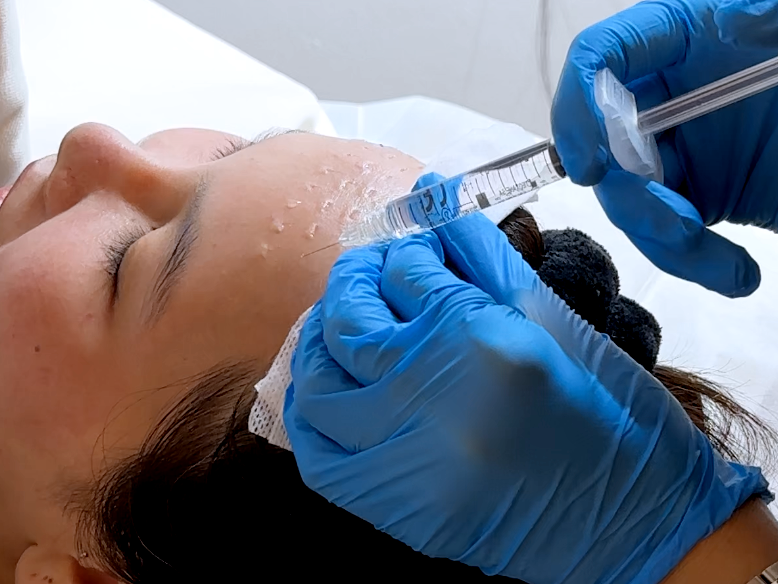
There's a particular kind of patient I see fairly regularly.
Good skincare routine. Has done a filler or two. Tried skinboosters. Feels like something still isn't quite right - the skin looks better in some ways but still a little red and sensitive. Not quite itself.
They usually come in asking about the next thing. A different filler. A laser. Something more.
Often, what they actually need is polynucleotides.
What's Missing
Skinboosters address dermal hydration. Fillers address volume and structure. What neither does is work at the cellular level - stimulating the fibroblasts themselves to produce more collagen and elastin, repairing the tissue from within rather than supplementing it from without.
This is what polynucleotides do. And it's a meaningfully different mechanism.
A patient whose skin is well-hydrated and structurally supported but still looks thin, slightly translucent, or lacking in resilience - that's usually a fibroblast problem. The cells aren't producing enough. The architecture is depleting quietly underneath everything else being done.
No amount of additional HA will fix that. The missing piece is cellular stimulation.
Who Tends to Respond Best
In practice, I find polynucleotides most impactful in a few specific situations.
Skin that has accumulated significant sun damage - which in Singapore, given year-round UV exposure, is most patients over thirty-five - responds well to the anti-inflammatory and regenerative effects. Sun damage doesn't just cause pigmentation. It degrades the structural integrity of the dermis in ways that show up as thinning, laxity, and a loss of the skin's natural density.
Skin that has been through something stressful - post-laser, post-procedure, or recovering from a reaction - benefits from the repair mechanism. Polynucleotides create conditions for the tissue to rebuild rather than just settle.
And patients in their late thirties and forties who want to slow the rate of structural decline - rather than correct it after the fact - often find PN to be the most intelligent long-term investment in their skin. Not because it's dramatic, but because it addresses the underlying biology before the surface consequences become significant.
What to Expect
Three sessions, typically spaced three to four weeks apart. Maintenance every three to six months thereafter.
Visible improvement begins around four to six weeks into the course. The full result takes longer. It doesn't announce itself - patients usually notice it when they look back at where they started rather than day to day.
At my clinic at Journey Aesthetics, we often use polynucleotides as a foundation layer - alongside or before other treatments - because skin that's regenerating at a cellular level responds better to everything on top of it.
It's not the most visible treatment we offer. It's often the most important one.
Dr Chia Min Shan is the Medical Director of Journey Aesthetics Medical Clinic in Katong, Singapore. She specialises in skin quality, facial aesthetics, and natural-looking results using treatments including botulinum toxin, dermal fillers, skinboosters, polynucleotides, Ultherapy Prime,Volnewmer, Fotona 4D, and Corage 2.0. Every treatment plan she creates is built around a thorough consultation - because understanding what a patient actually wants is where good aesthetic medicine begins.